Why 100% PE Is the Foundation of a Premium Christmas Tree
Every artificial Christmas tree on the market depends on one core decision: the material used to build the branches. No feature—lights, height, base, colour, or price—can compensate for the wrong material. The realism lives or dies in the foliage.
Most brands rely on PVC. PVC is sliced from flat plastic sheets, shredded into strips, and twisted around a wire. It is fast and cheap to produce, which is why retailers use it. But PVC is structurally incapable of reproducing the shape of a natural needle. It stays flat, shiny and repetitive. Under lights, the glare increases and the artificial look becomes more obvious.

A 100% PE tree is not built that way.
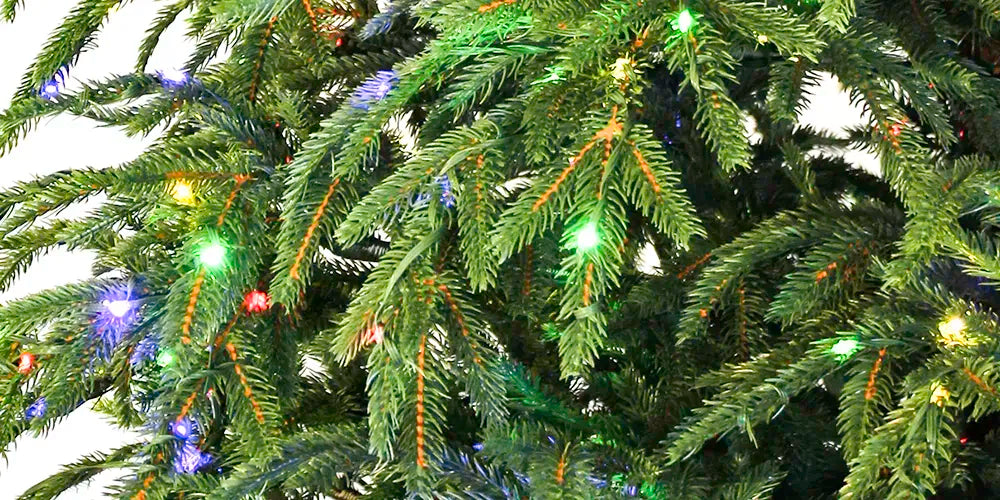
PE branches are created using moulds made from real evergreen cuttings. Branches are 3D scanned or cast directly, then injection-moulded. This captures every tiny detail: the curvature of the twig, the natural angles of the needles, the density variations, and the multi-tone greens that shift from the base to the tip.
A true full-PE tree—meaning every branch from trunk to tip is PE—is almost never sold by major brands because it costs more to produce. Twinkle n Grace uses 100% PE throughout the entire tree, not a blend. No PVC hiding in the core, no filler disguised behind a thin outer layer of PE.
Why this matters for realism:
- Rounded 3D needles replicate real species anatomy
- Multi-hue polymer pigments mimic genuine growth patterns
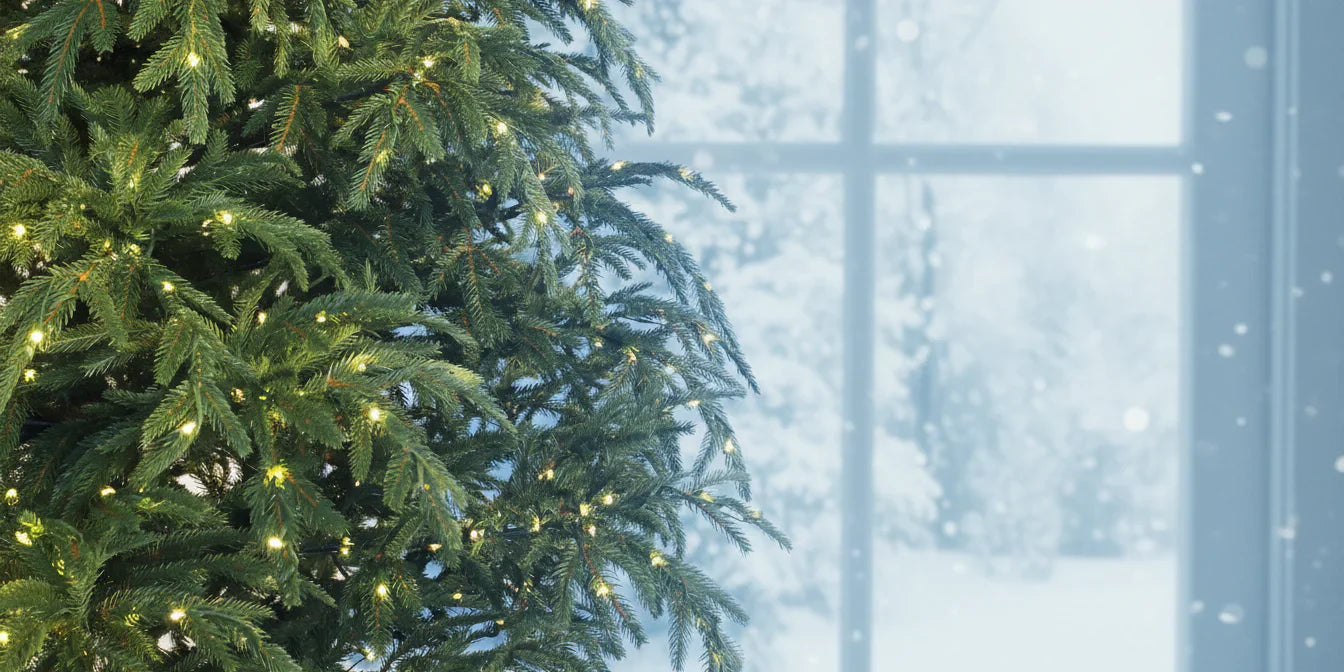
- Natural branch spacing creates realistic light distribution
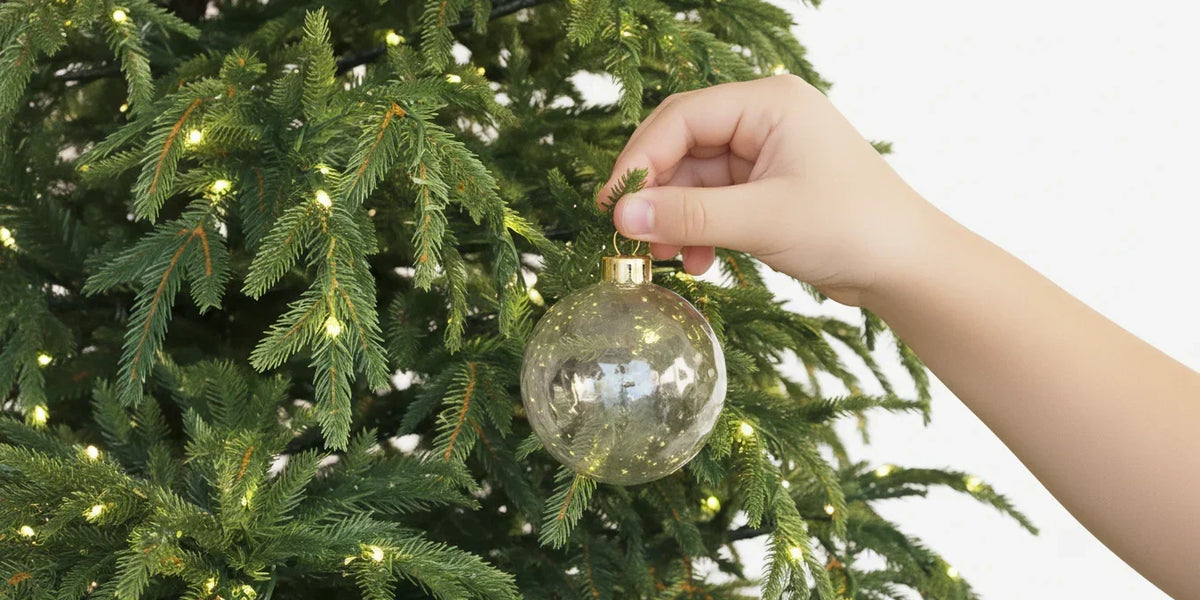
- Inner branches match outer tips, so the tree looks real from every angle
- No shine, no foil effect, no flat cut edges
100% PE is widely regarded as the premium choice for artificial Christmas tree foliage because its three-dimensional moulded construction can reproduce much more of the shape and texture of natural evergreen foliage.