
How to Choose a Premium Christmas Tree: The Complete Buying Guide
1. Choose the Right Material
If realism is your priority, the material your Christmas tree is made from is the single most important factor. 100% PE (Polyethylene) trees represent the absolute top tier of quality, beauty, and realism — and are the preferred choice for premium brands and discerning buyers.
Why 100% PE Trees Are the Premium Choice
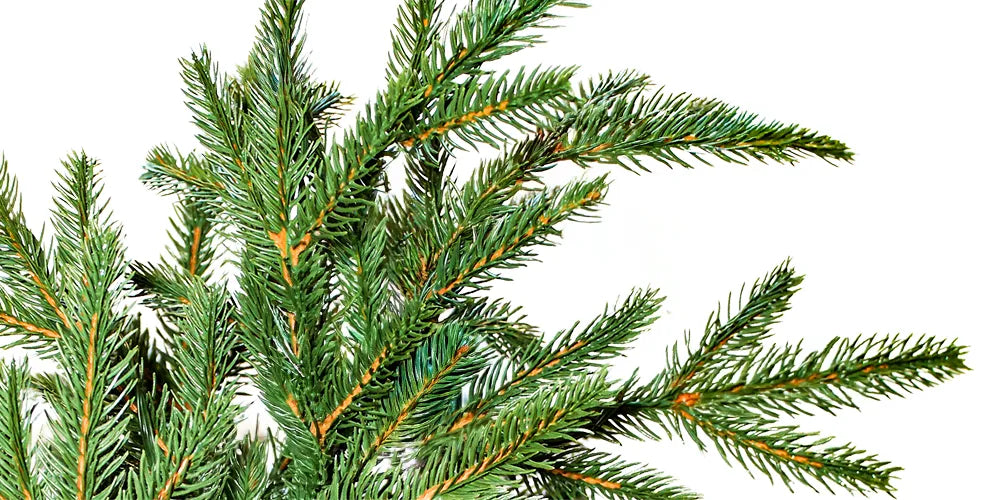
PE needles are moulded from real evergreen clippings, capturing the natural curve, texture, and dimensional appearance of live branches.
Key advantages of 100% PE:
-
Ultra-realistic from every angle: Every single tip is sculpted, not cut, making the entire tree look authentic — even close up.
-
Natural texture and softness: PE tips feel lifelike, without the stiff or plastic-like look of other materials.
-
Consistent premium quality: With no PVC filler branches, the tree maintains a natural, high-end appearance across all layers.
-
Superior durability and shape retention: PE holds its form and colour season after season, making it a long-lasting investment.
-
Beautiful in any lighting: Because PE tips replicate real needles, they catch and reflect light in a soft, natural way.
What About Trees That Mix PE and PVC?
Many trees on the market use a mix of PE and PVC — typically with PE tips placed on the outer visible branches, and PVC used internally to add fullness and reduce cost.
These trees can look nice from a distance, and they’re common in mid-range price categories. However, they still have limitations:
-
PVC branches are flat and artificial when viewed up close.
-
Fullness can hide realism, but cannot replace it.
-
Mixed trees often rely on PVC volume because PE is more expensive to manufacture.
-
The overall look is less consistent, with realistic outer layers but less detailed interior branches.
Mixed-material trees are a good compromise for budget-conscious shoppers — but not the premium standard.
Why 100% PE Is the Better Choice
A 100% PE tree offers true-to-nature realism from the tips all the way to the trunk, not just on the outer edge. This gives the tree:
-
A more uniform, lifelike appearance
-
Greater luxury and visual depth
-
Better shape, structure, and authenticity
-
A higher-quality feel that lasts for many seasons
For homeowners who want the best, most realistic Christmas tree available, 100% PE is the category leader — and the main difference you’ll notice every time you walk past your tree.
2. Choose the Right Shape: Full, Medium, Slim, or Pencil
Your space determines which tree shape suits you best.
Full Trees
-
Traditional, lush look
-
Ideal for spacious living rooms
-
Best for families that love lots of ornaments
Medium Trees
-
Perfect in-between option
-
Great for homes that want fullness without crowding
-
Good for modest-sized living rooms, studies, or open-plan areas
Slim Trees
-
Space-saving without losing height
-
Excellent for apartments, corners, hallways, and modern layouts
Pencil Trees
-
Ultra-narrow footprint
-
Ideal for tight spaces, entryways, or as a second tree
Always measure your space before choosing — width matters just as much as height.
3. Height Matters: Select the Perfect Size for Your Room
The most popular heights for Australian homes range from 6 ft to 8 ft.
Here’s a quick guide:
-
6 ft (183 cm): Great for small spaces
-
6.5 ft (198 cm): Ideal mid-size option that fits most rooms
-
7 ft (213.5 cm): Very popular and easy to decorate
-
7.5 ft (228.5 cm): Perfect for standard ceilings
-
8–9 ft: Great for high ceilings and dramatic spaces
Remember to leave around 20–30 cm of clearance for your tree topper.
4. Look at Branch Construction and Tip Count
A tree’s fullness comes from the number and quality of its branch tips.
-
Higher tip count = a fuller and more realistic tree.
-
PE moulded tips give lifelike detail.
-
Hinged construction makes setup easier and ensures the tree holds its shape year after year.
5. Decide Between Pre-Lit or Unlit — and Pay Attention to Light Count
Pre-Lit Trees
Pre-lit trees save time and deliver a professional, even glow. When choosing one, pay close attention to:
-
LED quality
-
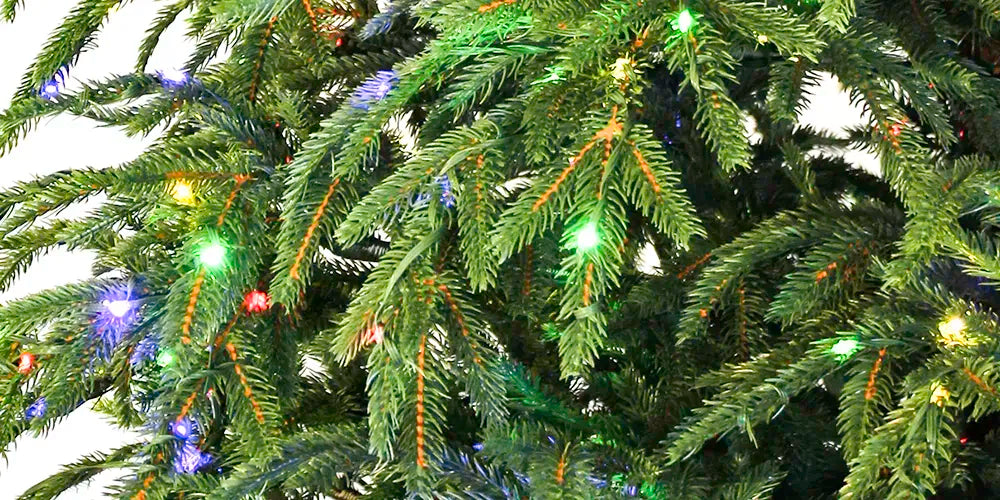
Light colour options (warm white, multicolour, RGB, smart effects)
-
Light count — more lights = brighter, more vibrant tree
-
Low-voltage systems for safety
-
Replaceable bulbs or modular sections
-
Even spacing of lights throughout branches
Unlit Trees
Perfect if you prefer full control over your lighting theme or want to update colours each year.
7. Check the Stand, Frame, and Build Quality
The structure of the tree matters just as much as the appearance.
Look for:
-
Sturdy metal stand
-
Wide, stable base
-
Solid section connectors
-
Protective feet for flooring
-
Durable frame that won’t bend or rust
Premium trees often include branded storage or protective accessories — a sign of thoughtful craftsmanship.
8. Look for a Longer Warranty (It Signals Quality)
A generous warranty is one of the strongest indicators of a well-made tree.
A long warranty means the manufacturer is confident in:
-
The durability of the frame
-
The quality of materials (PE, PVC, and wiring)
-
The longevity of the lighting system (for pre-lit trees)
When comparing trees, longer warranty = higher quality and peace of mind.
9. Read Customer Photos and Reviews
Customer photos give you the most realistic look at how a tree performs in real homes. Look at:
-
Full tree appearance
-
Close-up shots of branches
-
Real feedback on fullness, realism, and lighting
-
Ease of setup and storage experience
A premium tree should look just as impressive in customer photos as it does in professional product images.
Final Thoughts: Choosing the Best Christmas Tree for Your Home
Selecting the best Christmas tree is all about understanding materials, structure, lighting, and accessories. A high-quality, realistic tree brings beauty to your home, saves time each season, and lasts for years — making it a truly worthwhile investment.
%20trees%20represent%20the%20absolute%20top%20...)